How to Choose the Best Telescopes for Meteor Showers
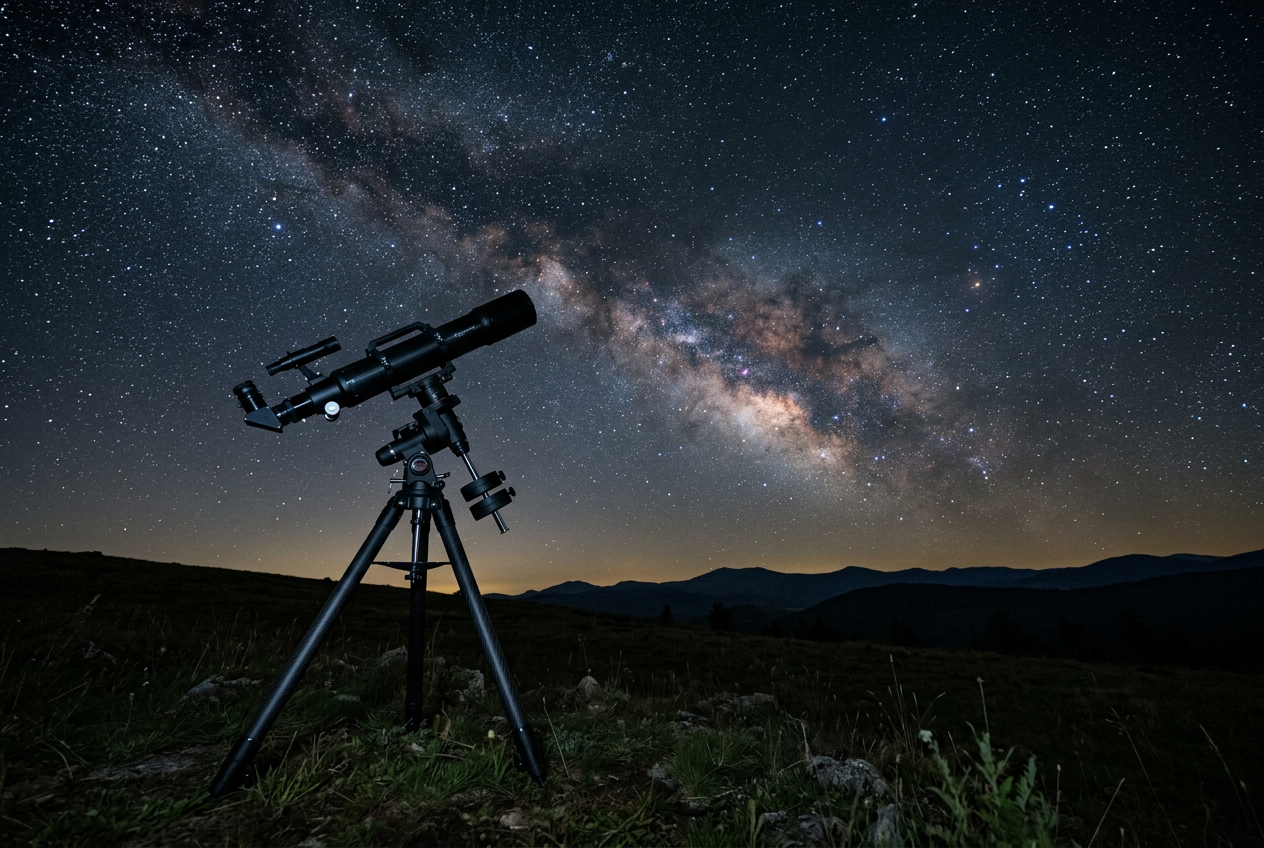
Watching shooting stars streak across a clear night sky is one of the most rewarding outdoor experiences. However, choosing the right optical equipment requires understanding how meteors behave. Beginners often search for the best telescopes for meteor showers expecting high magnification to bring fast-moving streaks into sharp focus. In reality, the mechanics of meteor watching differ significantly from planetary observation.
Because meteors travel across wide swathes of the sky in fractions of a second, high-power optics with narrow fields of view can make tracking them difficult. This practical buyer guide covers what equipment you actually need, whether wide-field telescopes or binoculars offer the best results, and how to prepare comfortably for a night under the stars.
Understanding Optics and Meteor Observation
Meteors are small particles of comet or asteroid debris burning up in Earth's upper atmosphere. They appear randomly across wide areas rather than staying fixed in a single spot. Standard astronomical telescopes excel at magnifying small, stationary targets like the rings of Saturn or lunar craters, but their narrow view makes catching rapid meteors challenging.
When selecting optics to complement naked-eye sky watching, wide-field instruments are preferable. A short-focal-length refractor telescope or a set of astronomical binoculars allows you to scan rich star clusters and nebulae between major meteor trails without losing spatial orientation.
Choosing the Best Telescopes for Meteor Showers and Stargazing
If you want a telescope that balances general stargazing with meteor shower events, prioritising a wide field of view and quick setup is essential. Here are the key specifications to evaluate before purchasing:
- Aperture and Focal Length: Look for wide-field refractors (often with focal lengths between 400mm and 600mm) or portable tabletop reflectors. These provide lower magnification but capture a broader slice of the sky.
- Eyepiece Selection: Low-power eyepieces (such as 25mm to 32mm wide-angle designs) yield the widest possible true field of view, making it easier to notice peripheral flashes.
- Mount Stability and Portability: Alt-azimuth mounts are intuitive, lightweight, and fast to reposition when moving between constellations.
- Finder Scope: A red-dot finder helps you align your optic quickly with active radiant points in the night sky.
For dedicated meteor counting, naked-eye viewing remains the primary technique, while an entry-level wide-field telescope serves as an ideal tool for exploring deep-sky objects during quieter moments of the shower.
Why Binoculars Often Beat Telescopes for Meteor Events
Many experienced stargazers prefer binoculars over telescopes during major meteor showers. Binoculars such as 7x50 or 10x50 models gather ample light while delivering an expansive 6-to-7-degree field of view. They allow natural two-eyed viewing, eliminate tracking delays, and are effortlessly portable when heading to dark-sky parks or remote countryside locations.
Setting Up Your Viewing Spot Comfortably
Stargazing sessions often last several hours in low temperatures. Staying warm and physically supported ensures you remain alert throughout peak shower activity. Dressing in flexible layers is standard advice; starting with a basic layer such as a Women's Printed Long-Sleeve T-Shirt beneath heavier insulated outerwear helps regulate body heat as temperatures dip after midnight.
Ground moisture and hard terrain can quickly cause fatigue if you are adjusting low tripods or resting on the grass. Keeping a Solid Multi Purpose Gel Knee Pad in your gear bag provides welcome cushioning when kneeling on damp turf to align finder scopes or adjust tripod legs. Similarly, unexpected dew or daytime sun during afternoon setups can be managed by packing a Compact And Portable Folding Sun Umbrella For Women alongside your optical kit.
Practical Steps for Peak Meteor Viewing
To maximise the number of meteors you see during an event, follow these straightforward field guidelines:
- Locate Dark Skies: Travel away from city streetlights. Even modest equipment performs significantly better under rural skies free from light pollution.
- Allow Time for Dark Adaptation: Give your eyes at least 20 to 30 minutes to adjust to darkness. Avoid looking at bright mobile screens during this period, or use a red-light torch.
- Look Toward the Radiant (with Peripheral Focus): Identify the constellation from which the shower appears to originate, but keep your gaze slightly offset to catch longer meteor trails.
- Use Optics Selectively: Rely on unaided vision for the main event, keeping your wide-field telescope or binoculars ready to inspect lingering persistent trains or nearby star fields.
Key Takeaway
The best optical setup for meteor showers prioritises wide fields of view, low magnification, and ease of portability over massive zoom power. By pairing unaided vision with wide-field binoculars or a compact refractor telescope, you can enjoy the full spectacle of falling stars alongside stunning views of the surrounding cosmos.
Frequently asked
- Can you track individual meteors through a telescope?
- Because meteors move across the sky in fractions of a second, tracking an individual streak with a high-magnification telescope is generally impractical. Wide-field optics are better used to examine persistent smoke trains left behind by bright fireballs.
- What magnification is best for viewing meteor showers?
- Low magnifications between 7x and 15x are ideal because they provide a wide field of view. Higher magnifications narrow your visible window, making it very difficult to catch fast-moving meteors.
- Do I need a telescope to enjoy a meteor shower?
- No, the unaided human eye is the most effective tool for spotting meteors. A telescope or pair of binoculars simply serves as a valuable secondary tool to inspect deep-sky objects between meteor sightings.
Selling something similar?
Listing on BNS is free. Add photos, set your price and reach buyers looking for exactly this.