A Guide to Buying Vintage World Maps and Prints
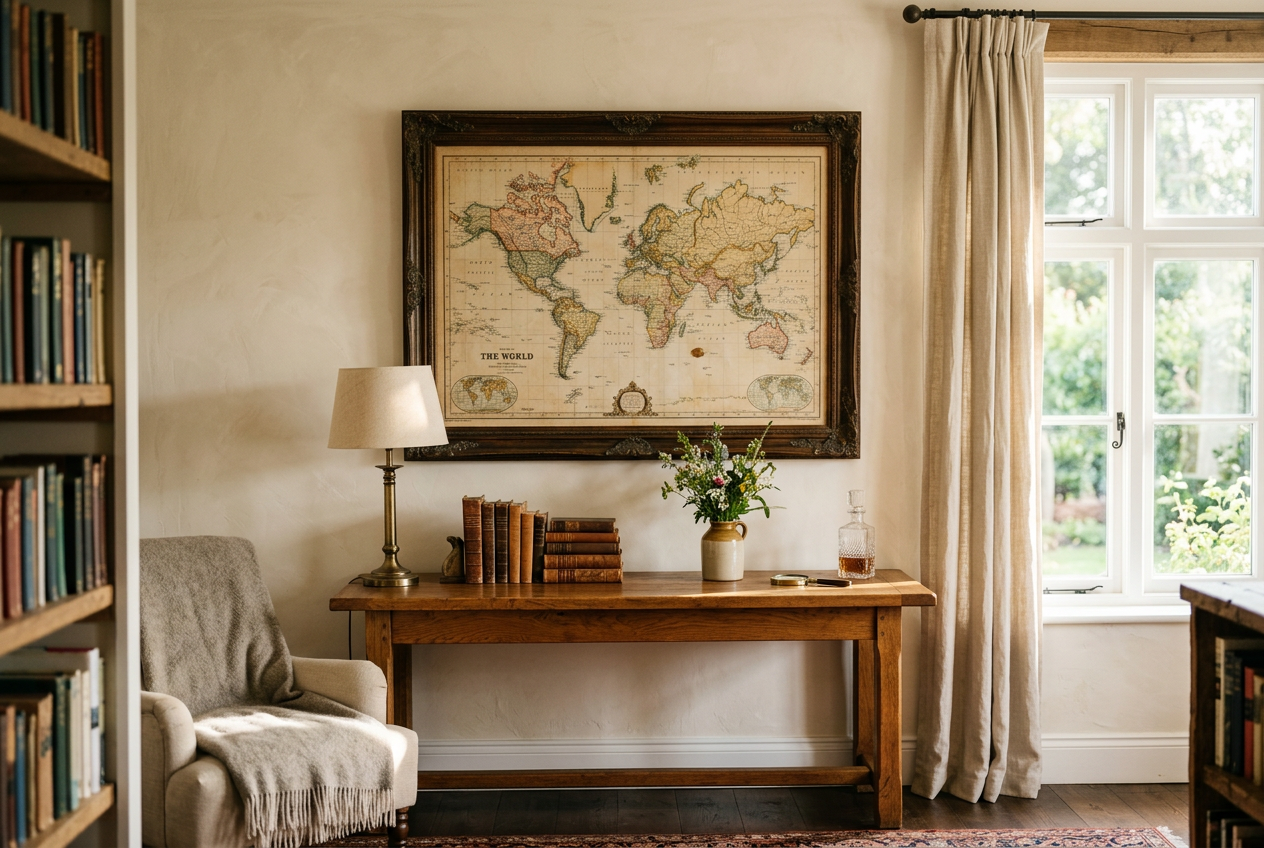
Decorating your walls with history brings a sense of character and curiosity into any room. Collecting vintage world maps has become an enduring interior design trend, offering both geographic charm and artistic appeal. Whether you want an original archival print from the early twentieth century or an affordable retro reproduction, understanding what you are buying helps ensure you pay a fair price.
With thousands of prints available across online marketplaces and estate sales, identifying true value requires a keen eye. Here is how you can evaluate condition, differentiate between original prints and modern facsimiles, and find the right cartographic artwork for your living space.
How to Identify Authentic Vintage World Maps
Original antique and mid-century maps have distinct characteristics that set them apart from digital reprints. If you are searching for authentic pieces rather than modern decorative posters, pay attention to the production method and materials.
Traditional mapmaking relied on engraving, lithography, or letterpress printing. When inspecting an original map, look for the following physical details:
- Plate marks and indentations: Copper and steel plate engravings leave a distinct pressed indentation around the map border where the metal plate met damp paper.
- Paper quality and chain lines: Pre-industrial paper was made from linen or rag fibres, often showing subtle grid-like wire marks known as chain lines when held to the light. Later nineteenth-century paper contains wood pulp, which naturally tones over time.
- Hand colouring vs. dot patterns: Early cartographers applied colour by hand with watercolour washes. Under a magnifying glass, modern reprints reveal uniform CMYK dot patterns, whereas original lithographs show solid layers or organic brush strokes.
- Geographic boundaries: Historical names and border shifts provide reliable dating clues. Country names such as Ceylon, the Austro-Hungarian Empire, or the Union of Soviet Socialist Republics can narrow down publication dates quickly.
Evaluating Condition and Fair Market Value
Condition plays a major role in determining what a map is worth. Minor age toning or soft creasing along original fold lines is typical for historical documents, but severe damage can diminish both value and aesthetic appeal.
Check for Damage and Alterations
Watch out for foxing—brown spotty fungal stains caused by humidity—and brittle edges from acidic backing boards. Be cautious of trims where margins have been cut down to fit modern frames, as intact original margins are prized by collectors. If a seller mentions professional archival repairs using Japanese tissue, this usually preserves structural integrity without damaging value.
Original vs. High-Quality Wall Reproductions
Not every space requires an expensive original. High-resolution reprints on textured linen paper or heavy matte stock can provide the warm, scholarly aesthetic of historical cartography at a fraction of the cost. If your goal is purely decorative, a clean reproduction allows you to frame and hang large-format wall art without worrying about light exposure or strict climate control.
Styling Cartographic Prints in Modern Spaces
Map artwork fits seamlessly into various decor themes, from classic study rooms to relaxed contemporary living areas. The neutral sepia tones, muted watercolours, and aged parchment hues pair naturally with organic textures, timber furniture, and soft ambient lighting. Incorporating ambient outdoor fixtures like a Solar-Powered Agave-Shaped Yard Ground Light nearby on a patio or garden wall can create an inviting transition between indoor reading nooks and outdoor spaces.
Many collectors extend their love of classic motifs into personal accessories and wardrobe essentials. A subtle piece like the Retro Rice Grain Pearl Turtle Scallop Alloy Pendant Anklet reflects that same coastal and nautical inspiration, while everyday accents like an Irregular Wave Hollow-Out Ring For Women or a patterned Women's Lapel Three-quarter Sleeve Plaid Shirt complement a vintage-inspired aesthetic.
Practical Tips for Smart Shopping
When browsing online listings, always request clear photographs of the entire sheet, including the margins and reverse side. Ask sellers whether the print is laid down on modern card or freely mounted, as permanent adhesive can ruin historical paper. Framing behind UV-protective glass is an excellent investment to keep colours bright and prevent sun fading for years to come.
Key Takeaway: Date your map using political borders and printing textures, decide between an authentic investment piece and a decorative reproduction, and always protect historical paper from moisture and direct sunlight.
Frequently asked
- How can I tell if a vintage world map is an original or a reproduction?
- Check the paper under magnification. Modern digital reproductions show tiny multicoloured dot grids, whereas genuine antique prints feature plate impressions, continuous ink lines, or hand-painted watercolour washes.
- Does folding damage the value of an antique map?
- Maps originally issued inside atlases or travel guides were folded by design. As long as the folds are clean and not torn along the seams, original publisher folds do not negatively impact value.
- How should I frame an older paper map?
- Use acid-free matting and backing boards to prevent yellowing, and opt for UV-filtering glass or acrylic to shield historical ink and paper from sunlight degradation.
Selling something similar?
Listing on BNS is free. Add photos, set your price and reach buyers looking for exactly this.